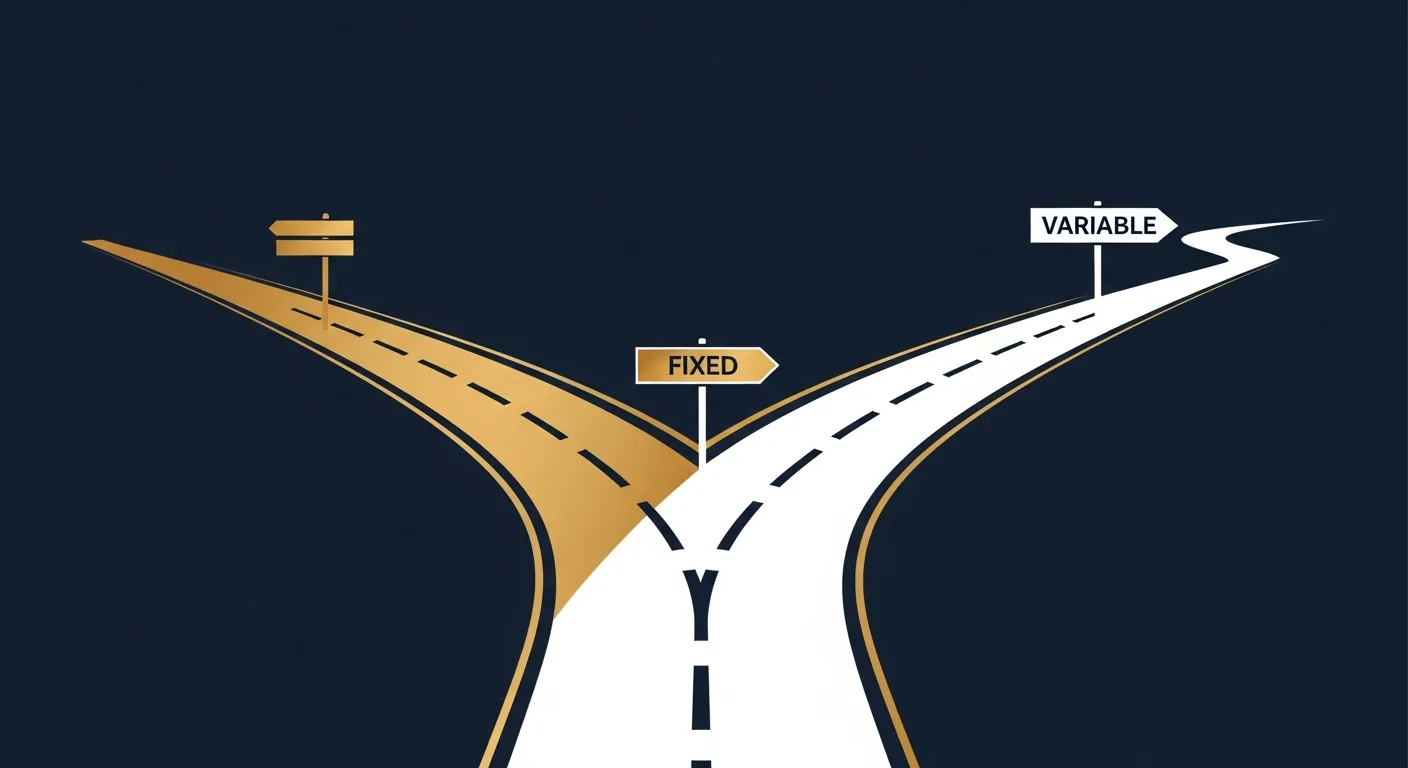
Why the choice is harder this year
For most of the last decade, variable rates sat well below fixed, rewarding borrowers willing to ride the ups and downs. In 2026 that gap has narrowed to a fraction of a percent, which changes the math.
When variable barely undercuts fixed, you are paying very little for the certainty a fixed rate provides. That tilts the decision toward fixed for borrowers who value predictable payments.
Choose fixed if...
You want a payment you can set and forget, your budget has little slack for rate increases, or you simply sleep better knowing the number will not move for five years. With the spread this thin, the peace of mind is close to free.
Choose variable if...
You believe the Bank of Canada will cut more than the market expects, you have enough cushion to absorb a few increases, or you may sell or refinance before the term ends and want to avoid large fixed-rate breakage penalties.
Remember that variable-rate mortgage penalties are usually just three months' interest, while fixed-rate penalties can run into the tens of thousands through the interest rate differential. If there is any chance you will break the mortgage early, factor that in.
Run your own numbers
There is no universally correct answer — only the one that fits your finances and temperament. Plug both rates into our mortgage calculator, compare the total interest over the term, and then ask yourself how you would feel if rates moved a full point against you.