Mortgage Basics6 min readUpdated May 2026
Written by Rishi Mohan, Founder · edited by the HomeWise Editorial Team

Open vs Closed Mortgages in Canada: Which Should You Pick?

Open and closed mortgages sit at opposite ends of the flexibility spectrum. Most Canadians choose closed for the lower rate — but in the right circumstances, the freedom of an open mortgage is worth the premium.

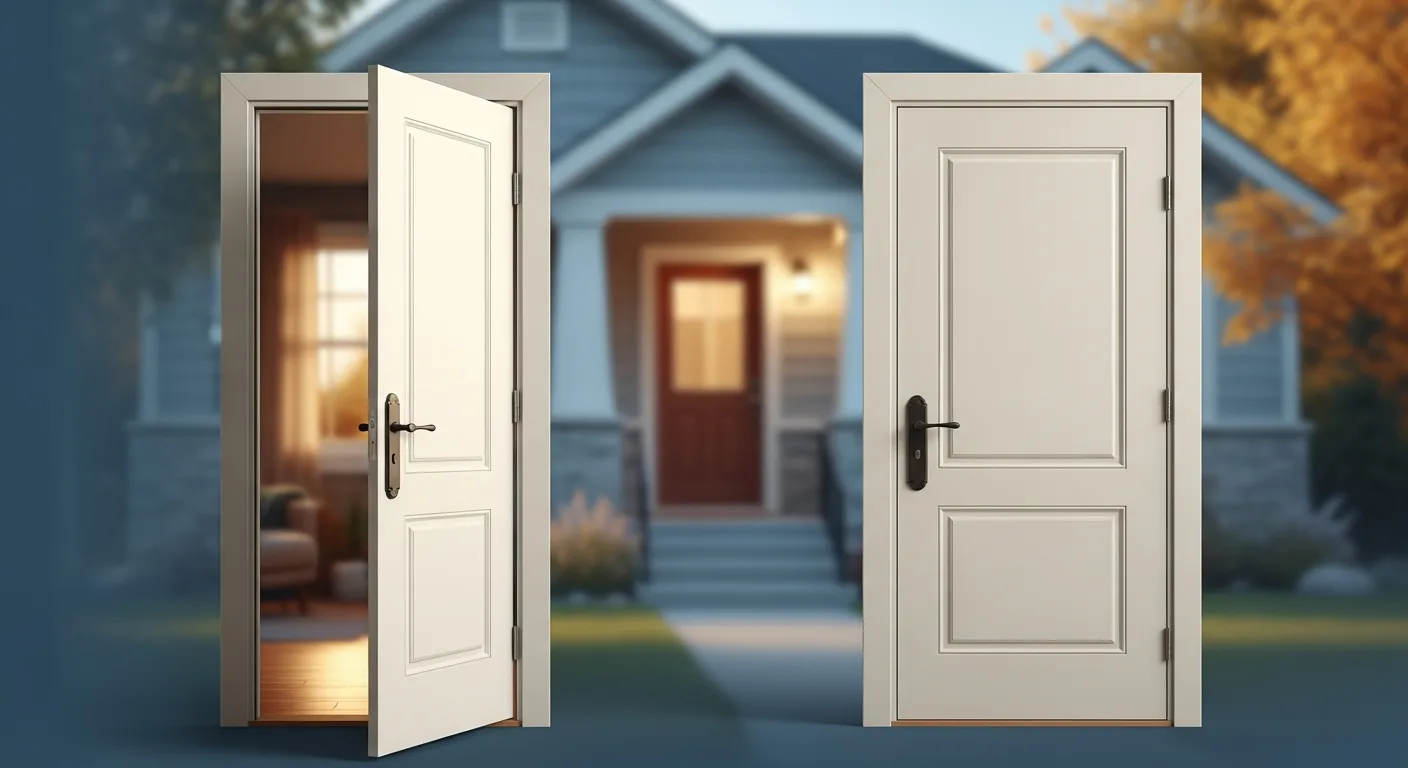
One open door and one closed door in front of a Canadian home, representing open versus closed mortgages

Key takeaways

  • A closed mortgage has a lower rate but limits how much you can prepay and charges a penalty to break it.
  • An open mortgage lets you repay any amount at any time penalty-free, but at a noticeably higher rate.
  • Closed mortgages still include prepayment privileges — often 10–20% per year — that cover most borrowers' needs.

Closed mortgages: lower rate, less freedom

A closed mortgage locks in your rate and term with a meaningfully lower rate than an open mortgage. In exchange, you agree to limits on how much extra you can pay each year and a penalty if you break the contract early.

Closed does not mean rigid. Most closed mortgages include annual prepayment privileges — commonly 10% to 20% of the original balance, plus the option to increase your regular payment — which is plenty for the vast majority of borrowers.

Open mortgages: full freedom, higher rate

An open mortgage can be repaid in full or in part at any time without penalty. That flexibility comes at a price: open rates are significantly higher than closed rates for the same term.

The premium is only worth paying if you are confident you will need to pay off or substantially prepay the mortgage soon.

When an open mortgage makes sense

For specific, short-term situations, the higher rate buys real value.

  • You are about to sell the home or expect a large lump sum (an inheritance, a bonus, a property sale).
  • You are in a short bridge period and want zero penalty risk.
  • You plan to pay off the mortgage entirely within the next several months.

The bottom line

For most buyers and renewers, a closed mortgage with solid prepayment privileges delivers the lower rate and enough flexibility. Reach for an open mortgage only when you have a concrete, near-term reason to need full freedom.

Frequently asked questions

Can I make extra payments on a closed mortgage?

Yes. Closed mortgages include prepayment privileges — typically allowing you to pay an extra 10–20% of the original principal per year and to increase your regular payment by a set percentage, all without penalty.

Are variable mortgages open or closed?

Both exist. Most variable mortgages are closed, but their break penalty is usually just three months' interest, which makes a closed variable far cheaper to exit than a closed fixed.

See the value of prepayments

Use our prepayment calculator to see how a closed mortgage's annual privileges can shave years off your amortization.

See the value of prepayments

This guide is for general information only and does not constitute financial advice. Rates, rules, and figures are estimates as of May 2026 and may change. Always confirm current rates and terms with a licensed mortgage professional or your lender.